
The Golden Touch: A History of Oscar-Winning Makeup Artistry
The Academy Awards
The Academy Award for Best Makeup and Hairstyling has been celebrating the transformative power of cosmetic artistry since its official introduction in 1981. However, the journey of makeup recognition at the Oscars began years before, with special achievement awards acknowledging groundbreaking work in the field. Let’s explore the remarkable artists who shaped cinematic history through their makeup mastery.
The Pioneering Years: Before the Official Category
While makeup artistry has been crucial to filmmaking since its inception, it wasn’t until 1964 that the Academy first recognized makeup work with a special achievement award. William Tuttle’s revolutionary work in “7 Faces of Dr. Lao” earned him this historic honor, setting the stage for future recognition of makeup artists.
During this period, groundbreaking transformations went largely unrecognized, including John Chambers’ work in 1968’s “Planet of the Apes.” The Academy eventually awarded Chambers an honorary Oscar in 1969 for his pioneering techniques in makeup artistry, marking another milestone in the field’s recognition.

The Golden Era Begins: 1981-2000
When the category was officially established in 1981, Rick Baker became the first winner for his revolutionary work in “An American Werewolf in London.” Baker’s practical effects and seamless transformations set a new standard for what could be achieved in makeup artistry. He would go on to win seven Academy Awards throughout his career, holding the record for most wins in this category.
The 1980s and 1990s saw remarkable achievements in makeup artistry:
– Ve Neill, who would become one of the most influential makeup artists, began her Oscar-winning streak with “Beetlejuice” (1988)
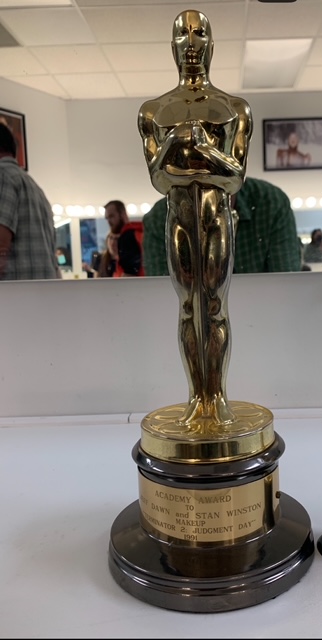
– Stan Winston’s and Jeff Dawn’s team earned recognition for “Terminator 2: Judgment Day” (1991)
– Greg Cannom’s aging makeup in “Mrs. Doubtfire” (1993) demonstrated the versatility of prosthetic applications
The Digital Age: 2000-Present
As technology evolved, makeup artists began blending traditional techniques with digital innovations. Notable achievements include:
– Peter Owen and Richard Taylor’s work in “The Lord of the Rings: The Return of the King” (2003)
– David Martí and Montse Ribé’s haunting creations for “Pan’s Labyrinth” (2006)
– Lisa Westcott and Julie Dartnell’s period-perfect looks in “Les Misérables” (2012)
Breaking Boundaries: Diversity and Innovation
Recent years have seen increased recognition for makeup artists who excel in creating looks for diverse skin tones and aging techniques:
– Joel Harlow and Gloria Pasqua-Casny’s work in “Star Trek” (2009) demonstrated excellence in alien prosthetics
– Mark Coulier and J. Roy Helland’s transformation of Meryl Streep in “The Iron Lady” (2011)
– Kazuhiro Tsuji, David Malinowski, and Lucy Sibbick’s incredible transformation of Gary Oldman in “Darkest Hour” (2017)
The Future of Makeup Artistry
Today’s makeup artists continue to push boundaries, combining traditional techniques with cutting-edge technology. The rise of HD cameras and 4K resolution has demanded even more precise application methods and innovative products.
Tips from the Masters
Leading makeup artists consistently emphasize several key principles:
1. Master the basics before attempting complex techniques
2. Understand light and how it affects makeup on camera
3. Stay current with both traditional and digital techniques
4. Practice color theory and skin tone matching
5. Build a versatile kit that can handle any challenge
Conclusion
The evolution of makeup artistry at the Academy Awards reflects not just changes in technique and technology, but also the growing recognition of makeup as a crucial element of filmmaking. From practical effects to subtle aging, from fantasy creatures to historical figures, Oscar-winning makeup artists continue to demonstrate that their craft is an essential part of bringing stories to life on screen.
Whether you’re an aspiring makeup artist or a film enthusiast, the history of Oscar-winning makeup artistry offers invaluable lessons in innovation, dedication, and the pursuit of excellence. As we look to the future, we can only imagine what new boundaries these talented artists will push next.
Are you interested in following in the footsteps of these legendary artists? The Art of Makeup School offers comprehensive programs. Contact us today to learn more about our courses and start your journey toward becoming the next Oscar-winning makeup artist.